
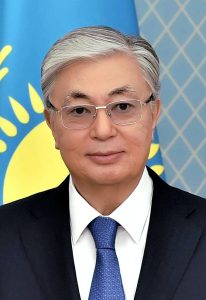
“The reforms we are implementing through our collective efforts constitute the principal path toward a prosperous future for Kazakhstan. Building on education and science, we will continue to develop a Just, Clean, Safe, and Strong Kazakhstan. I would like to specifically acknowledge the significant contributions of our strategic partners and educational and scientific institutions in advancing this important mission. Your efforts play a vital role in expanding the frontiers of science and enhancing the potential of our country’s greatest asset — its human capital.”
(From the speech of President Kassym-Jomart Tokayev at the Forum of Strategic Partners “Kazakhstan – Territory of Academic Education,” Astana, October 31, 2025).
Improving quality is one of the key challenges in professional development, and ensuring the quality of professional training, which provides specialists’ competitiveness in the labour market, is becoming increasingly crucial for the entire professional community in our country.
Today, specialists must be not only highly qualified in a specific field but also possess fundamental training and the ability to adequately express themselves socially, professionally, intellectually, and ethically.
Acquiring new professional knowledge and skills, taking into account new technologies, is a factor influencing a person’s professional development. The quality of professional training materials directly impacts individual success and the overall positive development of the professional community.
Professional knowledge and skills should become a prerequisite for achieving the desired standard of living and the primary driver of societal progress, as frequently emphasised by our President Kassym-Jomart Tokayev.
Changes in the labour market require professionals to develop critical thinking, mobility, and adaptability. The current stage of professional education is characterised by a shift from a qualification-based model of training specialists to a competency-based approach, which will enhance their adaptability in an increasingly dynamic and uncertain environment and prepare them as active participants in the new educational paradigm — “lifelong learning.”
The competency-based approach to education, unlike the traditional qualification-based approach, reflects requirements not only for the content of education (what one should know, be able to do, and the skills one should possess in a professional field) but also for the behavioural component (the ability to apply knowledge, abilities, and skills to solve tasks in professional activities).
Education of the Appraiser
An appraiser is an individual who practices professionally based on a certificate of qualification as an “appraiser” issued by a chamber of appraisers and is a member of one of the chambers of appraisers.
Candidates applying for a certificate of qualification as an “appraiser” must pass a qualification exam.
Eligible individuals to take the qualification exam for a certificate of qualification as an “appraiser” are those with a higher education degree in “Appraisal” and/or a higher technical or economic education, who have completed training or retraining in accordance with the program and in the number of hours approved by the chamber of appraisers, and who have also completed an appraiser’s internship for at least one year.
Preparation for Qualification Exams
Training of appraiser and expert candidates is carried out in accordance with the Training Program, Professional Retraining of Appraiser Candidates, and the Hours Schedule approved by Order No. 518 of the Minister of Finance of the Republic of Kazakhstan dated May 5, 2018.
Schedule of classes to prepare for qualifying exams for appraisers and experts – 2026
Advanced training
A schedule of courses and seminars – 2026